Room assignments and speaking order for every posted round. Competitors appear by code (last names optional, no schools); school affiliations publish with the results.
Fees are shown to coaches and other adults who are signed in. Sign in to see them.
Judging
Judge obligation1 judge per 5 entriesor fraction thereof
Fees are shown to coaches and other adults who are signed in. Sign in to see them.
Day-of Schedule
8:00 AMRegistration OpensOptional
9:00 AMPrelim 1
10:30 AMPrelim 2
12:00 PMPrelim 3
2:00 PMSemifinals
3:30 PMFinals
📅 Add to calendaror subscribe to this feed — schedule changes update automatically
Food & Concessions
There will be food served by our wonderful staff.
Awards
Awards go to the top 6.
Who is coming
26 schools registered so far.
Aberdeen Academy
Bowling Green State University
Canton Academy for Excellence
Cass Technical High School
Caswell Home School
Clifford H. Smart Middle School
DCDCDemo: Forest Hills Central
DNDNDemo: Novi
DWDWDemo: Walled Lake Western
Finneytown High School
Grosse Pointe South High School
Gunn High School
Hillel Day School
James R. Geisler Middle School
Keith Elementary
Mackinac Island School
Meadowbrook Elementary School
Pistons Academy
Quinnipiac University
Saginaw County Juvenile Center
Sarah G. Banks Middle School
The Jean and Samuel Frankel Jewish Academy
University of the Pacific
Utica Academy for International Studies
Walled Lake Central High School
WCWCWalnut Creek Middle School
Events
What each one is, and how long you have. The same rules and time limits the judges here will be reading.
Dramatic Interpretation· 5:00–8:00
Dramatic Interpretation is the presentation of a serious or humorous selection from a play written for either the stage or the electronic media. The cutting may be from a single selection of literature or a compilation. Adaptations of works from other genres (adaptations of poems, novels, or short stories) that are written for performance on the stage or in an electronic medium (radio, film, television) are permitted. In dramatic interpretation, a character developed in depth in a monologue is equally acceptable as a multiple character performance.
Judged on Quality of literature · Physical performance · Vocal performance · Total effect
The full ballot text
Concept of Event: Dramatic Interpretation is the presentation of a serious or humorous selection from a play written for either the stage or the electronic media. The cutting may be from a single selection of literature or a compilation. Adaptations of works from other genres (adaptations of poems, novels, or short stories) that are written for performance on the stage or in an electronic medium (radio, film, television) are permitted. In dramatic interpretation, a character developed in depth in a monologue is equally acceptable as a multiple character performance.
GUIDELINES FOR INTERPRETATION EVENTS
Script availability: Contestants must have a script, available for a judge to review in the round if requested. The script may be a hard copy of the original, photocopy of the original, or an electronic version on a device that can be made available to the judge in the round. A judge request for a contestant’s script must be made within the time frame of that round of competition. Should a judge need more extensive review time, the judge should make arrangements through tournament officials and the contestant’s coach.
Introduction/transitional material: Contestants may include an introduction with some remarks descriptive of the work, including plot, themes, mood, setting, character, and/or information about the author(s); such information may be used as transitional material. Introductory and/or transitional material is included in the time limits and may include singing, humming, or other creative approaches.
Clothing: Street attire that suggests mood and character is permissible. Costumes that are unique to the stage, such as period dress and robes, are prohibited.
BASIS OF DECISION
Oral Presentation: Original characterizations are encouraged. Only sound created by the voice and the body of the interpreter is allowed. Mechanical aids or instruments are not permitted. Sound made by unaltered chairs, stools, and/or blox are permitted.
Platform Conduct: The contestant may gesture and move around the platform as necessary. Good interpretation requires total physical, vocal, and emotional involvement. The presentation should not be dominated by choreography, and movement should be appropriate to the theme of the presentation. The use of a manuscript or notes is optional. NO hand props, decorative scripts, lighting, scenery, reader’s stands, benches, platforms, or risers are permitted. ONLY chairs, stools, and blox (BLOX with an X is defined as: An object with a flat base, top and sides, typically square or rectangular) are acceptable. Any physical manipulation using a chair/stool/blox during a round is allowable and permissible.
Suitability of Selection: Selections should reflect a reasonable standard of literature that is appropriate for the level of competition. The selections should be appropriate to the age, temperament, and capabilities of the interpreter. The selection(s) should be of the type that shows insight into human nature and creates an impact on the listener. Editing is permitted, but the author's intent must be preserved. The rewriting of a selection to change the gender of the primary characters is inconsistent with the author's intent and thus is not permitted. In interpretation events, the use of quality literature should be noted favorably, and a selection devoid of literary merit should be scored accordingly.
Timing: Each presentation must be timed. Timing starts when the presentation of the contestant begins. Either the judge or an alternate timekeeper, under the supervision of the judge, is responsible for using a stopwatch and for displaying time cards that are clearly visible to the contestant unless the performer prefers not to have visual timing. The number showing on the card should indicate the amount of time remaining. Judges should give an oral report of the actual time at the completion of each performance. Timing must be indicated on the ballot as well as on the contestants' critique sheets.
Presentations that do not conform to the suggested time parameters may be penalized at the discretion of the judge. Penalties are not mandatory for timing irregularities.
HIGH SCHOOL: Time limit for Dramatic Interpretation in high school is five (5) minutes to eight (8) minutes.
MIDDLE LEVEL: Time limit for Dramatic Interpretation in middle level is four (4) minutes to seven (7) minutes.
Contestant Evaluation: The ballot must be completely filled out and needs to include the contestant's name and code, the author, the rank, the percentage score, and the time of the presentation. Judges are to complete their ballots legibly.
Each judge shall rank the participants as 1,2,3, according to the relative merits of the contestants. All other contestants will receive a rank of 4. The judge shall also assign a percentage score ranging from 100 to 75. No two contestants can be given the same percentage.
All point scores must be assigned in whole integers. One hundred percent must be assigned to the best contestant with the points for all other contestants in the range of 99-75. The assignment of a score between 79-75 should be reserved for special circumstances; such as when a contestant fails to complete his or her presentation, exhibits inappropriate behavior, or performs highly inappropriate material.
Critique sheets and ballots must be returned to the ballot collection/tabulation room at the conclusion of each round.
Note: Please follow the instructions given at the judge’s meeting concerning speaking order. Invitational tournaments may draw in round. Regionals & State Finals use the order as listed on the schematic.
Duo Interpretation· 7:00–10:00
Duo Interpretation is the presentation by two participants of a single selection of humorous or serious literature from any genre or a selection that combines genres (e.g. drama and prose). The art of interpretation is to be regarded as re-creating believable characters in the selection presented.
Judged on Quality of literature · Physical performance · Vocal performance · Total effect
The full ballot text
Concept of Event: Duo Interpretation is the presentation by two participants of a single selection of humorous or serious literature from any genre or a selection that combines genres (e.g. drama and prose). The art of interpretation is to be regarded as re-creating believable characters in the selection presented.
In Duo Interpretation each of the performers may play one or more characters, so long as performance responsibility in the cutting remains as balanced as possible. Either or both of the performers may also present narration. During the presentation, the contestants must name the author and material source from which the cutting was made.
In Duo Interpretation, direct eye contact and touching are prohibited. Accidental bumping or eye contact that is corrected quickly should not disqualify students from competition. Direct eye contact with the audience is at the discretion of the performers.
A school may change a member of the duo between the regional and state tournament. Duos that compete at State Finals must include at least one original member of the duo that qualified from the regional level.
GUIDELINES FOR INTERPRETATION EVENTS
Script availability: Contestants must have a script, available for a judge to review in the round if requested. The script may be a hard copy of the original, photocopy of the original, or an electronic version on a device that can be made available to the judge in the round. A judge request for a contestant’s script must be made within the time frame of the round of competition. Should a judge need more extensive review time, the judge should make arrangements through tournament officials and the contestant’s coach.
Impromptu Speaking· 0:00–6:00
Impromptu speaking should develop speakers ability to provide reasoned responses with minimal preparation to a topic. The impromptu speech will reflect knowledge about a general subject area presented in an articulate manner within an organized framework.
Judged on Oral Presentation · Action and Platform Conduct
The full ballot text
Concept of Event: Impromptu speaking should develop speakers ability to provide reasoned responses with minimal preparation to a topic. The impromptu speech will reflect knowledge about a general subject area presented in an articulate manner within an organized framework.
The purpose of this event is to allow the verbalization of individual analysis on a topic of general interest. The emphasis is on the establishment of a position on the topic. Organization is important. The speaker should endeavor to relate to the concepts of the topic. Examples and illustrations from any area of knowledge may be used to highlight the theme of the presentation. A contestant may make notes or a brief outline during the time between receiving the prompt and beginning their presentation. Contestant may speak with or without the use of notes.
Procedure: The MIFA office will supply specific impromptu speaking prompts for regional and state contests. To remove the topic as a variable factor in the decision, all contestants in the same section will speak on the same topic. Topics will be short quotes, editorials, (with a maximum of 150 words), resolutions and/or visual prompts.
Prompts are made available to speakers in the following manner:
1. The sealed envelopes containing the impromptu prompts for each section will be given to the appropriate judge(s) immediately prior to each round. The judge should not open the sealed envelope containing the topic until they are in the competition room.
2. At invitationals, contestants may draw for speaking order. At MIFA Regional and State Final events, contestants perform in the order listed on the schematic. Contestants wait in the hall and at six-minute intervals, report to the competition room in order to take their turn. Contestants should enter only upon a signal from the judge. The only materials a contestant is allowed to bring into the room are writing implements, blank note cards, and/or blank paper. The contestant is not allowed to bring prepared notes, documents, publications, or printed material of any nature into the room. Contestants are to remain in the room after speaking unless otherwise indicated by the tournament director.
Multiple Interpretation· 10:00–15:00
Multiple Interpretation is the presentation of a selection of prose, poetry, or drama, or any combination of the genres by three to five participants. Source materials for Multiples alternate between any genre including musical theater/musical film when the State Tournament falls in an odd year and any genre excluding musical theater/musical film in even years. The event is designed to encourage the analysis and performance of selections of literary merit.
Judged on Quality of literature · Physical performance · Vocal performance · Total effect
The full ballot text
Concept of Event: Multiple Interpretation is the presentation of a selection of prose, poetry, or drama, or any combination of the genres by three to five participants. Source materials for Multiples alternate between any genre including musical theater/musical film when the State Tournament falls in an odd year and any genre excluding musical theater/musical film in even years. The event is designed to encourage the analysis and performance of selections of literary merit.
In multiple interpretation, direct eye contact and touching are prohibited. Accidental bumping or eye contact that is corrected quickly should not disqualify students from competition. Direct eye contact with the audience is at the discretion of the performers.
A school may add, delete or change members of a Multiple between the regional and state tournaments. Multiples that compete at State Finals must include at least one original member of the Multiple that qualified from the regional level.
GUIDELINES FOR INTERPRETATION EVENTS
Script availability: Contestants must have a script, available for a judge to review in the round if requested. The script may be a hard copy of the original, photocopy of the original, or an electronic version on a device that can be made available to the judge in the round. A judge request for a contestant’s script must be made within the time frame of that round of competition. Should a judge need more extensive review time, the judge should make arrangements through tournament officials and the contestant’s coach.
Storytelling· 5:00–8:00
Storytelling is the delivery of a single selection or compilation of material suitable for children, including contemporary literature, myths, legends, fairy tales, and folktales. Acceptable selections for storytelling must come from children's literature for any age. The use of manuscripts, notes, or books is permitted.
Judged on Quality of literature · Physical performance · Vocal performance · Total effect
The full ballot text
Concept of Event: Storytelling is the delivery of a single selection or compilation of material suitable for children, including contemporary literature, myths, legends, fairy tales, and folktales. Acceptable selections for storytelling must come from children's literature for any age. The use of manuscripts, notes, or books is permitted.
GUIDELINES FOR INTERPRETATION EVENTS
Script availability: Contestants must have a script, available for a judge to review in the round if requested. The script may be a hard copy of the original, photocopy of the original, or an electronic version on a device that can be made available to the judge in the round. A judge request for a contestant’s script must be made within the time frame of the round of competition. Should a judge need more extensive review time, the judge should make arrangements through tournament officials and the contestant’s coach.
Introduction/transitional material: Contestants may include an introduction with some remarks descriptive of the work, including plot, themes, mood, setting, character, and/or information about the author(s); such information may be used as transitional material. Introductory or transitional material is included in the time limits and may include singing, humming, or other creative approaches.
Clothing: Street attire that suggests mood and character is permissible. Costumes that are unique to the stage, such as period dress and robes, are prohibited.
BASIS OF DECISION
Oral Presentation: Original characterizations are encouraged. Only sound created by the voice and the body of the interpreter is allowed. Mechanical aids or instruments are not permitted. Sound made by unaltered chairs, stools, and/or blox are permitted.
Getting there
Buses unload at the east entrance off Ten Mile Road; a student marshal will meet you there from 6:45.
Cars park in Lot C (the big lot behind the gym). The south lot is staff and judges only until 9:00.
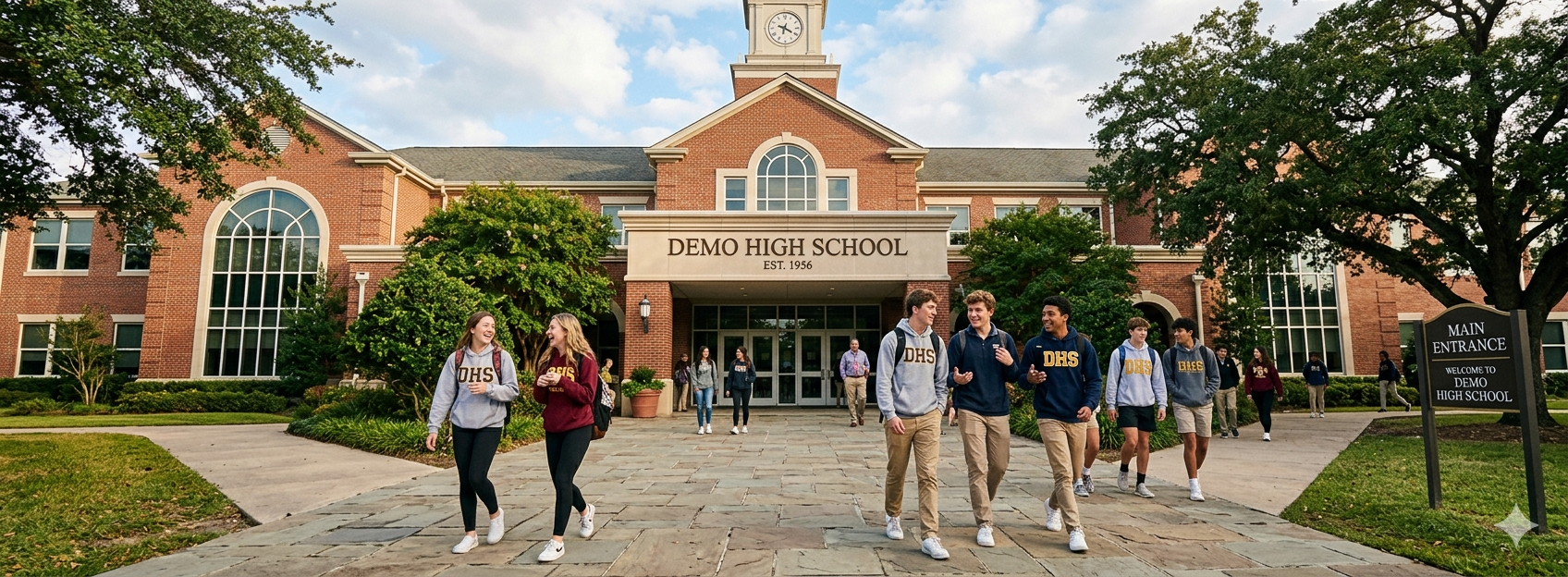
Doors open at 7:15. If you arrive before that, the main entrance vestibule is unlocked and warm.
Introduction/transitional material: Contestants may include an introduction with some remarks descriptive of the work, including plot, themes, mood, setting, character, and/or information about the author(s); such information may be used as transitional material. Introductory and/or transitional material is included in the time limits and may include singing, humming, or other creative approaches.
Clothing: Street attire that suggests mood and character is permissible. Costumes that are unique to the stage, such as period dress and robes, are prohibited.
BASIS OF DECISION
Oral Presentation: Original characterizations are encouraged. Only sound created by the voice and the body of the interpreter is allowed. Mechanical aids or instruments are not permitted. Sound made by unaltered chairs, stools, and/or blox are permitted.
Platform Conduct: The contestant may gesture and move around the platform as necessary. Good interpretation requires total physical, vocal, and emotional involvement. The presentation should not be dominated by choreography, and movement should be appropriate to the theme of the presentation. The use of a manuscript or notes is optional. NO hand props, decorative scripts, lighting, scenery, reader’s stands, benches, platforms, or risers are permitted. ONLY chairs, stools, and blox (BLOX with an X is defined as: An object with a flat base, top and sides, typically square or rectangular) are acceptable. Any physical manipulation using a chair/stool/blox during a round is allowable and permissible.
Suitability of Selection: Selections should reflect a reasonable standard of literature that is appropriate for the level of competition. The selections should be appropriate to the age, temperament, and capabilities of the contestant. The selection should be of the type that shows insight into human nature and creates an impact on the listener. Editing is permitted, but the author's intent must be preserved. The rewriting of a selection to change the gender of the primary characters is inconsistent with the author's intent and thus is not permitted. In interpretation events, the use of quality literature should be noted favorably, and a selection devoid of literary merit should be scored accordingly.
Timing: Each presentation must be timed. Timing starts when the contestant begins their presentation. Either the judge or an alternate timekeeper, under the supervision of the judge, is responsible for using a stopwatch and for displaying time cards that are clearly visible to the contestant unless the performer prefers not to have visual timing. The number showing on the card should indicate the amount of time remaining. Judges should give an oral report of the actual time at the completion of each performance. Timing must be indicated on the ballot as well as on the contestants' critique sheets.
Presentations that do not conform to the suggested time parameters may be penalized at the discretion of the judge. Penalties are not mandatory for timing irregularities.
HIGH SCHOOL: Time limit for Duo Interpretation in high school is seven (7) minutes to ten (10) minutes.
MIDDLE LEVEL: Time limit for Duo Interpretation in middle level it is five (5) minutes to eight (8) minutes.
Contestant Evaluation: The ballot must be completely filled out and needs to include the contestant's name and code, the author, the rank, the percentage score, and the time of the presentation. Judges are to complete their ballots legibly.
Each judge shall rank the participants as 1,2,3, according to the relative merits of the contestants. All other contestants will receive a rank of 4. The judge shall also assign a percentage score ranging from 100 to 75. No two contestants can be given the same percentage.
All point scores must be assigned in whole integers. One hundred percent must be assigned to the best contestant with the points for all other contestants in the range of 99-75. The assignment of a score between 79-75 should be reserved for special circumstances; such as when a contestant fails to complete his or her presentation, exhibits inappropriate behavior, or performs highly inappropriate material.
Critique sheets and ballots must be returned to the ballot collection/tabulation room at the conclusion of each round.
Note: Please follow the instructions given at the judge’s meeting concerning speaking order. Invitational tournaments may draw in round. Regionals & State Finals use the order as listed on the schematic.
3. The judge will open the sealed envelope containing the prompt in the presence of the first contestant. Each student should be given a copy of the prompt at the beginning of their turn. If the tournament director supplies multiple copies of the prompt each contestant should speak from a "fresh" copy of the topic. Timing will begin when the contestant receives the topic from the judge.
4. Six minutes is the suggested total time limit for preparation and speaking for each contestant. Signals for preparation time are at the request of the contestant. There is no minimum speaking time; however, it is conceivable a contestant could speak for most of the six minutes. Timing should begin with the six-minute card and progress downward using MIFA procedures [Speech Activities, Individual Events: Tournament Procedures (Timing)] to zero. Verbal announcements of the total presentation time must be made at the end of the presentation. Presentations, which do not conform to the suggested time parameters, may be penalized at the discretion of the judge.
5. After speaking, each contestant shall return the topic to the judge and must remain in the room to listen to the remaining speakers. It is important, in this situation, that the judge collects the multiple copies of the topic from the contestants prior to allowing the contestants to leave the room. The judge must return all copies of the prompts to the tabulation room with their ballot.
BASIS FOR DECISION
Oral Presentation: The delivery of the speech should be enthusiastic, direct, sincere, and communicative. The speaker should give the impression of genuineness without affectation in attitude, manner, or appearance. The speaker's delivery should be effective in enlisting and holding the interest of the audience. The speaker may deliver the speech from a manuscript, memory, an outline, or any combination thereof.
Action and Platform Conduct: The speaker should exhibit personality, maintain direct eye contact with the audience, show physical poise, and demonstrate freedom in posture, movement, and gesture. Prompting from the audience is not allowed and could be the basis for disqualification.
Timing: Each presentation must be timed. Timing starts when the contestant receives the topic. Either the judge or an alternate timekeeper, under the supervision of the judge, is responsible for using a stopwatch and for displaying time cards that are clearly visible to the contestant unless the performer prefers not to have visual timing. The number showing on the card should indicate the amount of time remaining. Judges should give an oral report of the actual time at the completion of each performance. Timing must be indicated on the ballot as well as on the contestants' critique sheets.
Presentations that do not conform to the suggested time parameters may be penalized at the discretion of the judge. Penalties are not mandatory for timing irregularities.
HIGH SCHOOL: Time limit for Impromptu Speaking in high school is zero (0) minutes to six (6) minutes.
Contestant Evaluation: The ballot must be completely filled out and needs to include the contestant's name and code, the author, the rank, the percentage score, and the time of the presentation. Judges are to complete their ballots legibly. Each judge shall rank the participants as 1,2,3, according to the relative merits of the contestants. All other contestants will receive a rank of 4. The judge shall also assign a percentage score ranging from 100 to 75. No two contestants can be given the same percentage. All point scores must be assigned in whole integers. One hundred percent must be assigned to the best contestant with the points for all other contestants in the range of 99-75. The assignment of a score between 79-75 should be reserved for special circumstances; such as when a contestant fails to complete his or her presentation, exhibits inappropriate behavior, or performs highly inappropriate material. Critique sheets and ballots must be returned to the ballot collection/tabulation room at the conclusion of each round.
Note: Please follow the instructions given at the judge’s meeting concerning speaking order. Invitational tournaments may draw in round. Regional & State Tournaments use the order as listed on the schematic.
Introduction/transitional material: Interpreters may include an introduction with some remarks descriptive of the work, including plot, themes, mood, setting, character, and/or information about the author(s); such information may be used as transitional material. Introductory or transitional material is included in the time limits and may include singing, humming, or other creative approaches.
Clothing: Street attire that suggests mood and character is permissible. Costumes that are unique to the stage, such as period dress and robes, are prohibited.
BASIS OF DECISION
Oral Presentation: Original characterizations are encouraged. Only sound created by the voice and the body of the interpreter is allowed. Mechanical aids or instruments are not permitted. Sound made by unaltered chairs, stools, and/or blox are permitted.
Platform Conduct: The interpreter may gesture and move around the platform as necessary. Good interpretation requires total physical, vocal, and emotional involvement. The presentation should not be dominated by choreography, and movement should be appropriate to the theme of the presentation. The use of a manuscript or notes is optional. NO hand props, decorative scripts, lighting, scenery, reader’s stands, benches, platforms, or risers are permitted. ONLY chairs, stools, and blox (BLOX with an X is defined as: An object with a flat base, top and sides, typically square or rectangular) are acceptable. Any physical manipulation using a chair/stool/blox during a round is allowable and permissible.
Suitability of Selection: Selections should reflect a reasonable standard of literature that is appropriate for the level of competition. The selections should be appropriate to the age, temperament, and capabilities of the interpreter. The selection(s) should be of the type that shows insight into human nature and creates an impact on the listener. Editing is permitted, but the author's intent must be preserved. The rewriting of a selection to change the gender of the primary characters is inconsistent with the author's intent and thus is not permitted. In interpretation events, the use of quality literature should be noted favorably, and a selection devoid of literary merit should be scored accordingly.
Timing: Each presentation must be timed. Timing starts when the presentation of the contestant begins. Either the judge or an alternate timekeeper, under the supervision of the judge, is responsible for using a stopwatch and for displaying time cards that are clearly visible to the contestant unless the performer prefers not to have visual timing. The number showing on the card should indicate the amount of time remaining. Judges should give an oral report of the actual time at the completion of each performance. Timing must be indicated on the ballot as well as on the contestants' critique sheets.
Presentations that do not conform to the suggested time parameters may be penalized at the discretion of the judge. Penalties are not mandatory for timing irregularities.
HIGH SCHOOL: The time limit for Multiple Interpretation in high school is ten minutes to fifteen minutes.
MIDDLE LEVEL: The time limit for Multiple Interpretation in middle level is eight minutes to twelve minutes.
Contestant Evaluation: The ballot must be completely filled out and needs to include the contestant's name and code, the author, the rank, the percentage score, and the time of the presentation. Judges are to complete their ballots legibly.
Each judge shall rank the participants as 1,2,3, according to the relative merits of the contestants. All other contestants will receive a rank of 4. The judge shall also assign a percentage score ranging from 100 to 75. No two contestants can be given the same percentage.
All point scores must be assigned in whole integers. One hundred percent must be assigned to the best contestant with the points for all other contestants in the range of 99-75. The assignment of a score between 79-75 should be reserved for special circumstances; such as when a contestant fails to complete his or her presentation, exhibits inappropriate behavior, or performs highly inappropriate material.
Critique sheets and ballots must be ballot collection/returned to the tabulation room at the conclusion of each round.
Note: Please follow the instructions given at the judge’s meeting concerning speaking order. Some Invitational tournaments may draw in round. Regional & State Tournaments use the order as listed on the schematic.
Platform Conduct: The interpreter may gesture and move around the platform as necessary. Good interpretation requires total physical, vocal, and emotional involvement. The presentation should not be dominated by choreography, and movement should be appropriate to the theme of the presentation. The use of a manuscript or notes is permitted. NO hand props, decorative scripts, lighting, scenery, reader’s stands, benches, platforms, or risers are permitted. ONLY chairs, stools, and blox (BLOX with an X is defined as: An object with a flat base, top and sides, typically square or rectangular) are acceptable. Any physical manipulation using a chair/stool/blox during a round is allowable and permissible.
Suitability of Selection: Selections should reflect a reasonable standard of literature that is appropriate for the level of competition. The selections should be appropriate to the age, temperament, and capabilities of the interpreter. The selection(s) should be of the type that shows insight into human nature and creates an impact on the listener. Editing is permitted, but the author's intent must be preserved. The rewriting of a selection to change the gender of the primary characters is inconsistent with the author's intent and thus is not permitted. In interpretation events, the use of quality literature should be noted favorably, and a selection devoid of literary merit should be scored accordingly.
Timing: Each presentation must be timed. Timing starts when the presentation of the contestant begins. Either the judge or an alternate timekeeper, under the supervision of the judge, is responsible for using a stopwatch and for displaying time cards that are clearly visible to the contestant unless the performer prefers not to have visual timing. The number showing on the card should indicate the amount of time remaining. Judges should give an oral report of the actual time at the completion of each performance. Timing must be indicated on the ballot as well as on the contestants' critique sheets.
Presentations that do not conform to the suggested time parameters may be penalized at the discretion of the judge. Penalties are not mandatory for timing irregularities.
HIGH SCHOOL: TIME LIMIT for Storytelling in high school is five (5) minutes to eight (8) minutes.
MIDDLE LEVEL: TIME LIMIT for Storytelling in middle level is four (4) minutes to seven (7) minutes.
Contestant Evaluation: The ballot must be completely filled out and needs to include the contestant's name and code, the author, the rank, the percentage score, and the time of the presentation. Judges are to complete their ballots legibly.
Each judge shall rank the participants as 1,2,3, according to the relative merits of the contestants. All other contestants will receive a rank of 4. The judge shall also assign a percentage score ranging from 100 to 75. No two contestants can be given the same percentage.
All point scores must be assigned in whole integers. One hundred percent must be assigned to the best contestant with the points for all other contestants in the range of 99-75. The assignment of a score between 79-75 should be reserved for special circumstances; such as when a contestant fails to complete his or her presentation, exhibits inappropriate behavior, or performs highly inappropriate material.
Critique sheets and ballots must be returned to the ballot collection/tabulation room at the conclusion of each round.
Note: Please follow the instructions given at the judge’s meeting concerning speaking order. Some Invitational tournaments may draw in round. Regional & State Tournaments use the order as listed on the schematic.