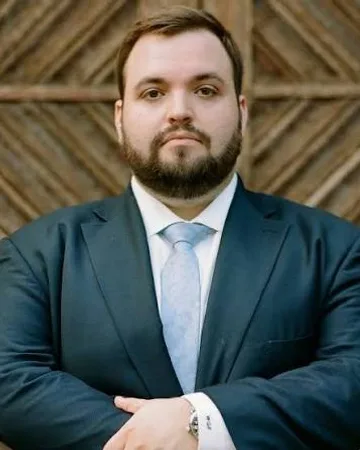


In January 2006, two students from Andover High School called the media office of the North American International Auto Show and asked for press credentials. They were sixteen and seventeen. They got them (the first time the school’s radio station had been issued passes for the event) and spent the day on the floor of Cobo Hall interviewing the mayor of Detroit, Aretha Franklin, and the reigning Miss Michigan.
One of them was Wade Fink. Four months later he won the Michigan state championship in Broadcasting.
The Biff
Andover runs a real radio station. WBFH-FM 88.1, “The Biff,” has been on the air since the 1970s, staffed entirely by students, and Fink was its sports director. He also co-hosted an evening DJ show called Detention.
By the time he graduated he had won nine national awards and eleven state ones, the most national awards any student in the station’s history had ever won, and the second-highest career total of anyone who had passed through it. As a junior, the same spring he won the state forensics title, he took first place in Newscast at the national high-school radio awards and third in Sportscast.
The Detroit Free Press came out to profile the station for its thirtieth anniversary in September 2006 and found him at the board. The one line they quoted from him is not about himself. Asked about the broadcast, he pointed at the student running the soundboard: “Make sure you mention who was running the board.”
His teacher, the station’s founder, offered the assessment: “Wade and many of the other students are really something.”
A twenty-five-megabyte file of that Auto Show broadcast is still sitting on the station’s server.
He kept choosing the voice
Fink went to Emerson College in Boston, a communication school, and took a degree in broadcast journalism and political science. He DJ’d on WERS 88.9 and hosted a talk show on the college’s talk and information network. He interned at WDFN and WWJ Newsradio back in Detroit, and for Senator Carl Levin. He hosted a national dance competition that travelled to more than thirty cities.
For a while his own Twitter bio summed it up in six words: Fmr sports writer and radio.
Then he came back to Michigan for law school at Wayne State, and the competitive speaking picked up exactly where it had left off. He made a national moot court team that reached the final round of the ABA’s appellate advocacy regionals in Washington, and he finished tenth in oral advocacy out of seventy-two. He graduated magna cum laude and Order of the Coif in 2014.

The family business
“Fink: A Household Name in Detroit” is the actual headline on his firm’s website, and it is not an exaggeration. His father was Neil Fink, for decades one of the best-known criminal defence lawyers in the state, a Mumford High School kid who started out alongside Joseph Louisell and ended up defending Detroit’s most notorious clients. When he died in 2016, a Michigan Supreme Court justice said no criminal defence attorney had ever been more highly regarded. A former federal prosecutor remembered “an incredibly fast, incisive mind and a great wit and a remarkable ability to communicate with jurors.”
His mother, Kimberly Stout, has practised criminal defence for forty years and has tried cases with Wade as co-counsel.
The moment Fink points to is small and from childhood. Writing about the death of the federal judge Arthur Tarnow in 2022, he recalled that his father had spoken at Tarnow’s investiture in 1997, and “introduced me to him at Tiger Stadium, and I have called him one of my heroes ever since.”
He spent two years at a large firm and opened Wade Fink Law in March 2017.
What he argues
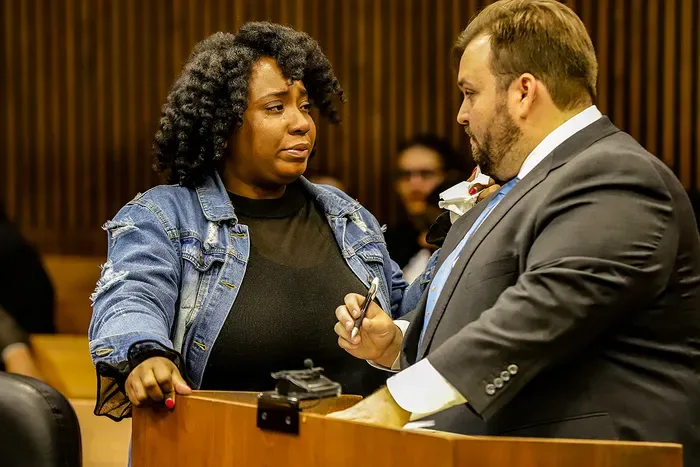
He is best known for representing Siwatu-Salama Ra, the Detroit environmental justice organizer convicted of felonious assault for brandishing a registered, unloaded pistol during a confrontation in 2017. She was pregnant when she was sentenced, and gave birth while incarcerated. Fink took the appeal and won it: in August 2019 the Michigan Court of Appeals held that the trial judge had instructed the jury on the wrong standard, because brandishing a weapon is not the same act as using deadly force. The convictions were reversed. The following January prosecutors dropped the felony charges and she pleaded no contest to a ninety-day misdemeanour, with no further time.
“Look at all this paper,” he said that day, holding up the nine hundred letters that had gone to the prosecutor asking her to let it go.
He also got a first-degree murder conviction thrown out in Macomb County after his team interviewed the jurors and found that a juror had used a racial slur during deliberations, and that four of them had heard it. “It wasn’t just one juror who heard these racist statements,” he said. “It was four.”
And in 2023 he stood up in the Sixth Circuit and argued that a federal district judge who had said his client “looks like a criminal to me” should have recused himself. The court agreed, in a published opinion, and vacated the conviction. It made the national papers.
Of everything on his firm’s news page, the case it singles out as the one he is proudest of is an early civil trial he won for a Michigan prisoner against three guards who had abused him.
A family calling
Fink explains why he does the work in terms his father would recognize:
“What my passion and purpose in being a criminal defence lawyer is, you are not defending just that individual, you are defending the system from wrongful convictions.”
“I very much believe that the most guilty of us needs the most protection.”
Broadcasting is the event where the contest is your voice: you are handed copy, and what is being judged is whether a stranger listening believes you. He won the state in it at seventeen, and then arranged the next twenty years of his life so he would never have to stop doing it.
On record
Our results archive is still being built and has gaps, so this is simply what we hold today.