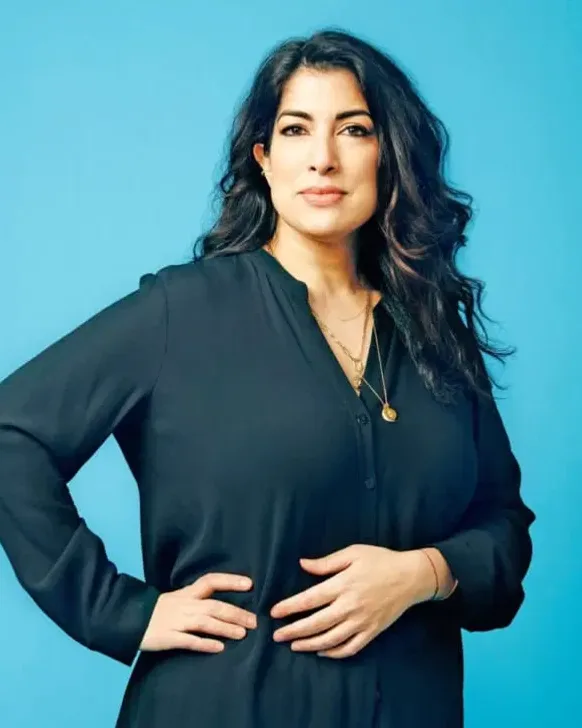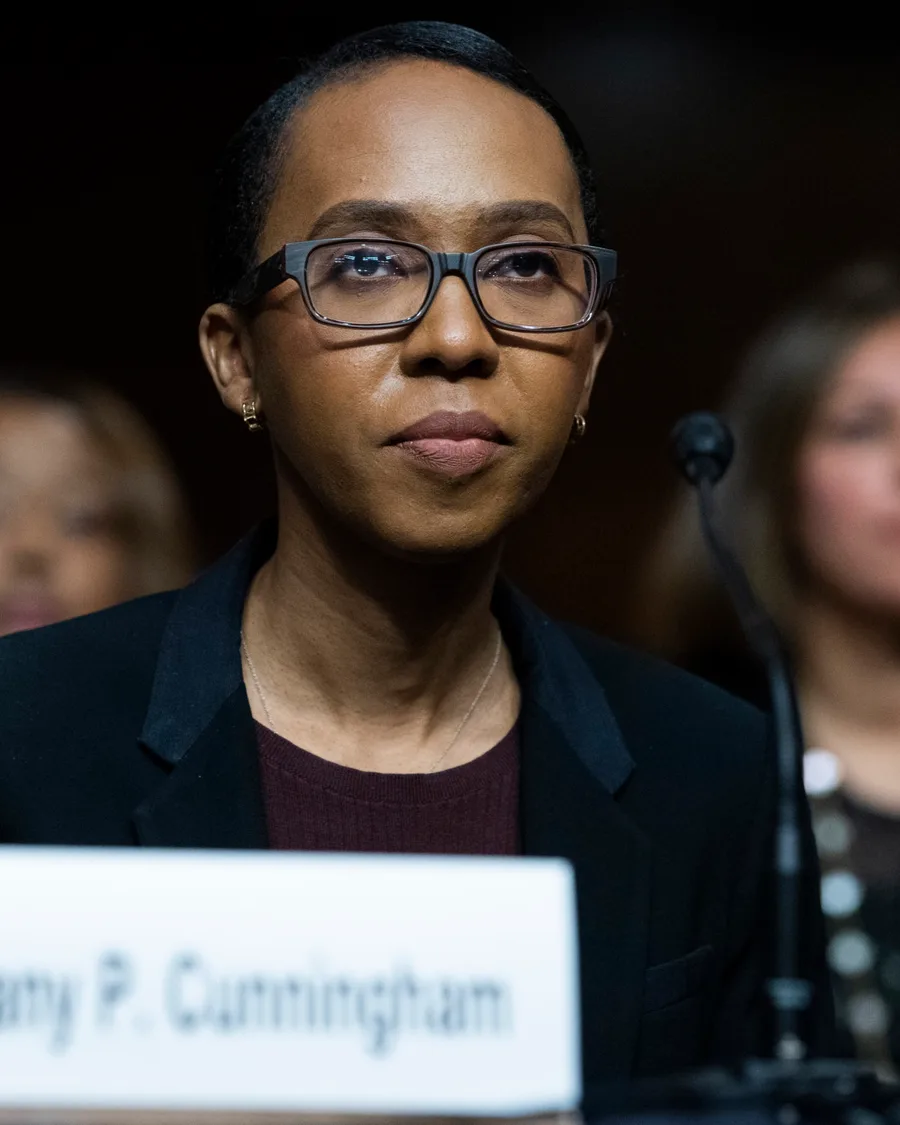

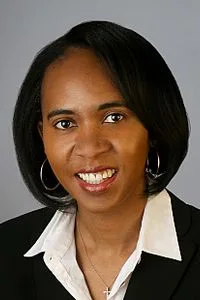
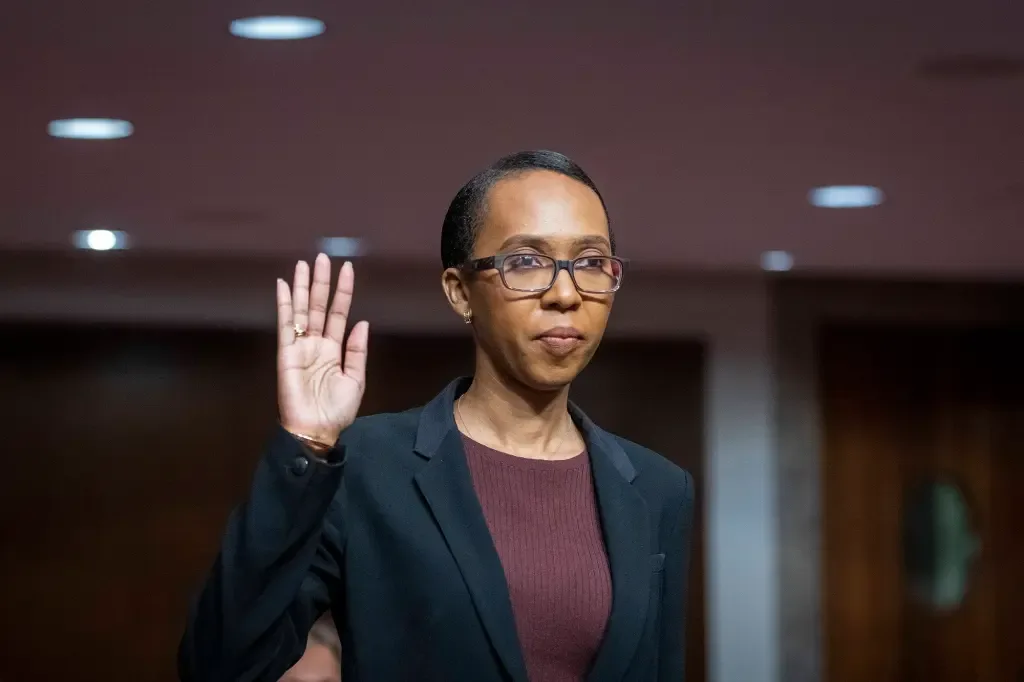
At four o’clock on the afternoon of September 1, 2021, in a judge’s chambers in Washington, Tiffany P. Cunningham raised her right hand and became a judge of the United States Court of Appeals for the Federal Circuit, the court that hears the nation’s patent appeals. She was the first Black judge in its history. The chief judge administered the oath on the Lincoln Bible. The court’s announcement records who held it for her: Dr. Muneera Kapadia.
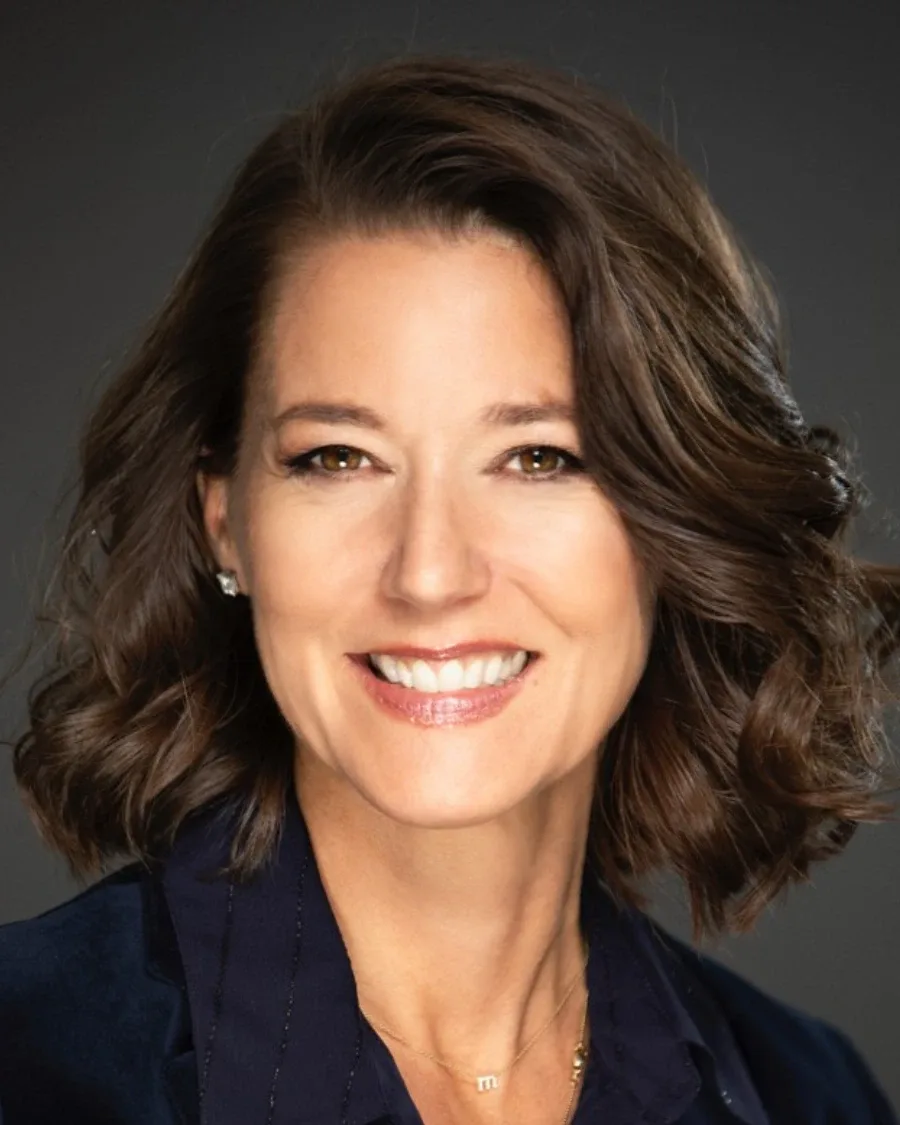
Here is a detail the announcement left out. In the spring of 1994, the final round of Informative speaking at the MIFA State Finals had two students from The Roeper School in it. One was a senior named Tiffany Cunningham, who finished fourth in the state. Her fellow finalist was Roeper student Muneera Kapadia.
A Roeper lifer
Cunningham was born in Detroit in 1976. Her mother taught high school English in the Detroit Public Schools, and her father, a Vietnam veteran, worked in the auto industry. She attended Roeper from the Lower School all the way to graduation in 1994.
Those were good years to be on the Roeper forensics team. Roeper won the Class C/D team state championship in 1993 and again in 1994, her junior and senior seasons. When the school won the title again in 2024, it was reported as the first in thirty years, which makes hers the team the current one was chasing.
Informative is the event where a student writes an original speech whose only job is to make a subject clear. It rewards precision, and a talent for making a complicated thing plain without making it wrong. It is not hard to see a future patent judge in that.
An oral argument, she has said, should be a conversation with the court, not a performance, and she has little patience for imprecision.
Engineering, then law
She went to MIT and earned a degree in chemical engineering in 1998, with membership in both Phi Beta Kappa and the engineering honor society Tau Beta Pi. Then she went to Harvard Law School, graduated in 2001 and clerked for Judge Timothy Dyk on the very court she would later join.
She has said the clerkship is where the idea took hold. She noticed how alike the judges on the bench looked, and decided that one day she would try for a seat there herself.
First came two decades as a patent litigator in Chicago: an associate and then a partner at Kirkland & Ellis, then a partner at Perkins Coie, where she served on the firm’s executive committee. She is a registered patent attorney, and she argued appeals before the Federal Circuit herself.
The nomination
President Biden announced his intent to nominate her in March 2021. The American Bar Association rated her unanimously well qualified. Her Senate hearing took place the day before her forty-fifth birthday and lasted less than half an hour. The Senate confirmed her 63 to 33 that July.
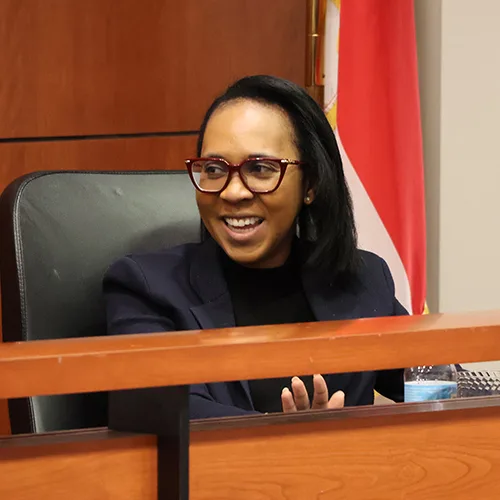
She now sits alongside Judge Dyk, the judge she once clerked for. She has said she looks for law clerks who know what she does not, computer science especially. And she has made a point of being visible to the people coming up behind her: the court has held arguments in front of students at law schools in San Francisco, at Duke and, in October 2025, at Harvard, with Cunningham on the bench. She has said that a judiciary that looks like the country earns more of its trust, and that she takes mentoring seriously.
An Informative speaker spends a season learning how to explain one hard thing so well that a stranger understands it in a few minutes. She now does that for a living, in opinions that shape how American inventions are protected.
On record
Our results archive is still being built and has gaps, so this is simply what we hold today.