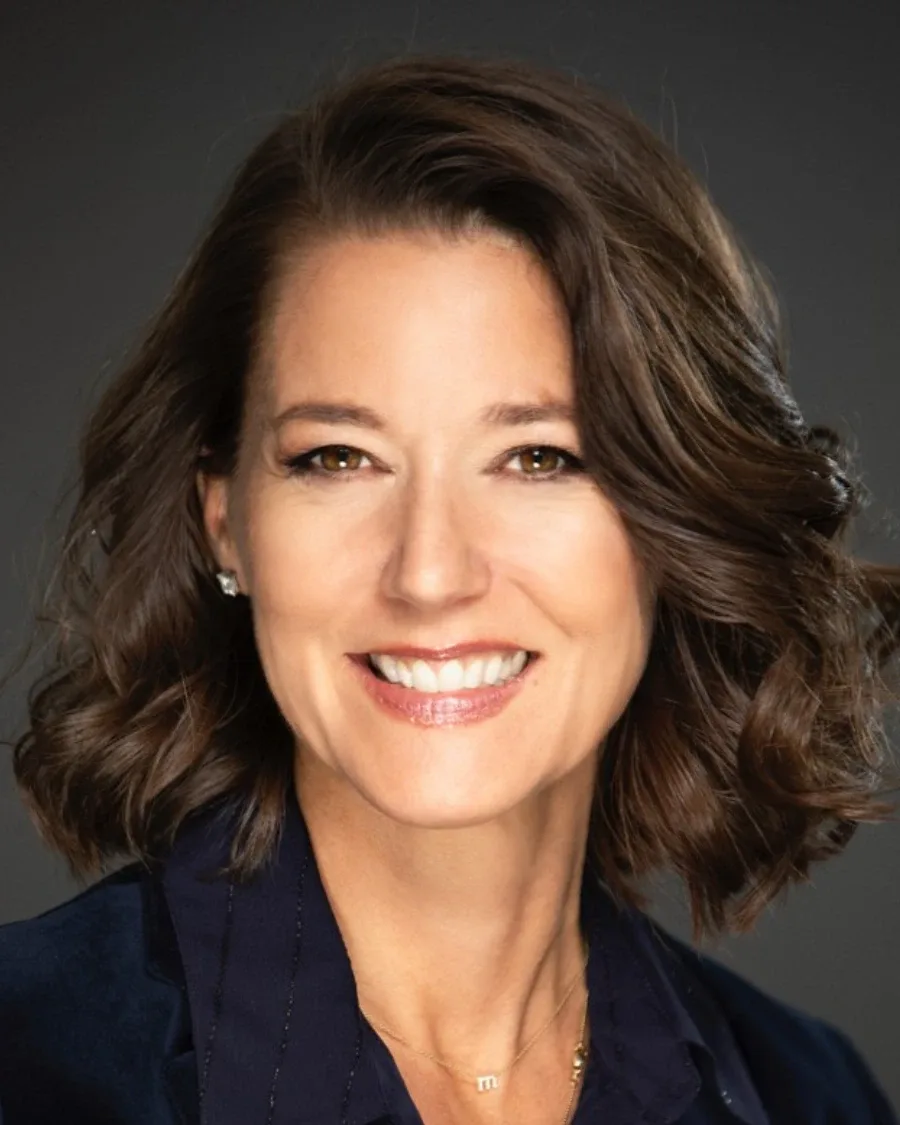

On January 11, 2000, President Clinton stood at Hopi Point on the rim of the Grand Canyon and announced the protection of more than a million acres: a new national monument on the canyon’s north side, another in the Arizona desert, a third along the entire California coast. In his remarks he thanked, by name, an Interior Department lawyer who had done much of the work and could not be there. Molly McUsic had given birth the day before.
Twenty years earlier she had been a senior at Kearsley High School, outside Flint, standing in front of a judge at the MIFA State Finals with a question about current events and thirty minutes of notes.
A Michigan speech connection
McUsic graduated from Kearsley in 1980. That spring she reached the State final in Extemporaneous Speaking representing Kearsley among Michigan’s Extemp finalists.
Extemp hands you a question you did not choose, gives you half an hour, and asks you to be clear, accurate and persuasive in front of someone who owes you nothing. It is about as close as high school gets to testifying before a congressional committee, which she would later do.
Kearsley has celebrated her work, too. When the district created its Hall of Fame in 2014, she was one of nine people in the first class.
Notre Dame, Harvard, the Supreme Court
She studied economics at Notre Dame and graduated with high honors in 1984. At Harvard Law School she graduated magna cum laude in 1989 and served on the Harvard Law Review. She clerked for Judge Dorothy Nelson on the federal appeals court in California and then, in the 1991-92 term, for Justice Harry Blackmun at the Supreme Court.
She became a law professor, earning tenure at the University of North Carolina and teaching as a visiting professor at Harvard. Her scholarship was in property law, in particular the question of when the government owes landowners compensation for regulating what they can do with their land.
The map
In the late 1990s she went to the Interior Department as Counselor to Secretary Bruce Babbitt, and put that scholarship to work on some of the biggest land questions in the country.
She was the department’s lead negotiator on the Utah Schools and Lands Exchange Act of 1998. For half a century Utah and the federal government had failed to untangle a checkerboard of state school-trust parcels scattered through national parks, forests and the new Grand Staircase-Escalante monument. Under the deal she negotiated, the federal government took over some 377,000 acres of school-trust land, much of it inside the new monument and other protected places, and Utah’s schools received federal land, coal and $50 million they could actually put to work. It is often described as the largest land exchange between a state and the federal government in the lower forty-eight states. In 2000 she was back before Congress making the case for another Utah exchange, telling the committee that the state’s schoolchildren, its land users, the taxpayers and the environment all came out ahead.
She also helped prepare the national monument designations of 2000, the work the President credited from the canyon rim.
Thirty percent of the planet
Today she is president of the Wyss Foundation, a conservation philanthropy. In 2018 the foundation launched the Wyss Campaign for Nature with a pledge of $1 billion, since raised to $1.5 billion, toward a goal of protecting thirty percent of the planet’s land and oceans by 2030. By early 2024 the foundation counted more than 100 million acres protected with its support, and she has said she is especially proud of the work done alongside Indigenous communities. She also sits on the board of the Wyss Academy for Nature in Switzerland.
She has described the foundation’s approach as backing local groups that build public support for protecting land and keeping it open to everyone.
It is a long way from a classroom in Genesee County to the rim of the Grand Canyon. The skill that got her there is the one Extemp teaches: take a hard question, get the facts right, and explain it so that the room comes with you.
On record
Our results archive is still being built and has gaps, so this is simply what we hold today.