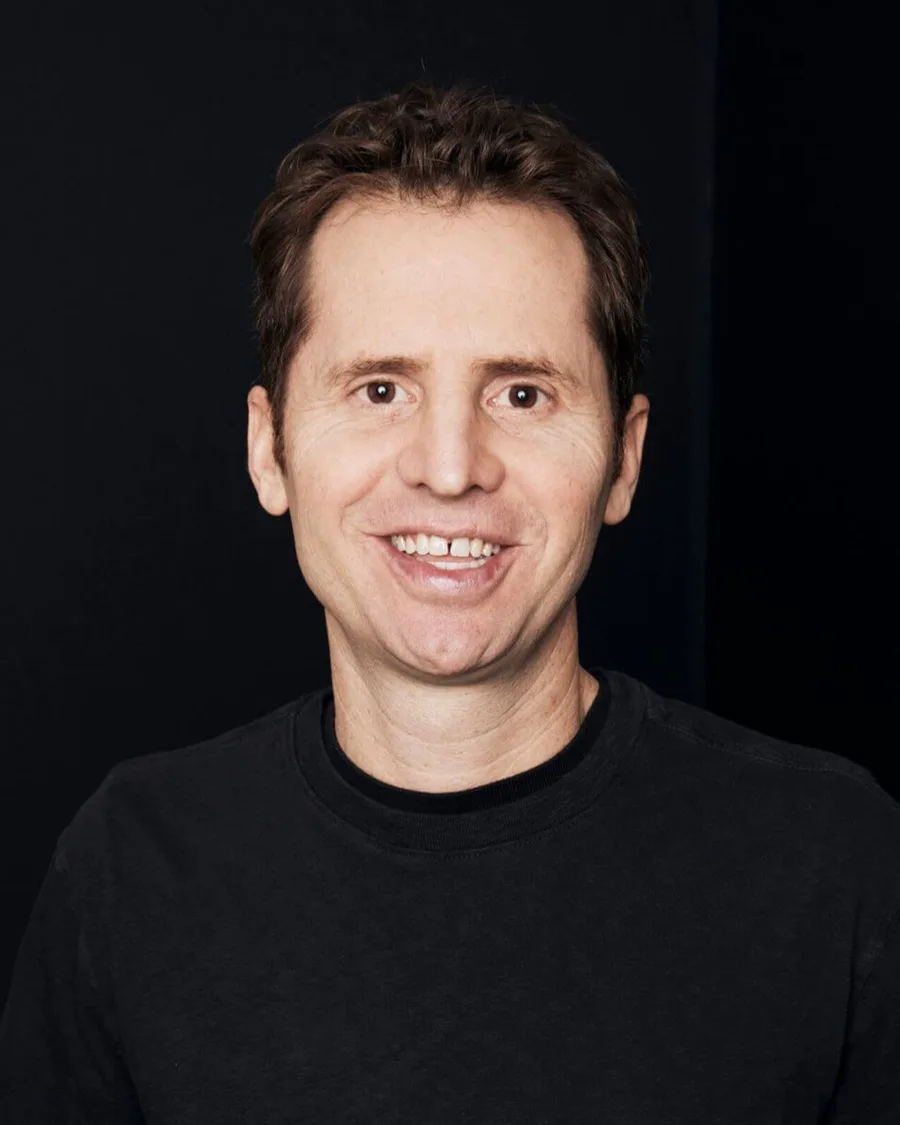

In May, a company called Recursive Superintelligence came out of stealth with $650 million in funding and a valuation of $4.65 billion. Its goal is artificial intelligence that improves itself: systems that run their own experiments, learn from them and get better without a person in the loop. It has eight founders. One of them is Jeff Clune, a professor of computer science at the University of British Columbia, a Canada CIFAR AI Chair at the Vector Institute, and a graduate of Groves High School.
He was also, in 1994 and again in 1995, one of six finalists in Extemporaneous Speaking at the Michigan State Finals.
Thirty minutes to explain the world
Extemp works like this. You draw a question about current events that you have never seen before. You get half an hour to prepare. Then you stand up and answer it for a judge, using only the notes you made in that half hour. Clune reached the State final in the event two years running for Groves, in the years before the State Finals divided events by school size.
His résumé lists a plenary debate at one of the field's biggest conferences and a public debate on the future of artificial general intelligence. His research videos have been watched more than ten million times. When Groves gave him its Honor Alumnus Award in 2017, he thanked four of his Groves teachers by name: John Lawson, Susan Mundy, Barbara Shaheen and Marla Fallucca, along with Ms. Grunert, who taught him fifth grade at Meadow Lake Elementary. Groves lists a Mr. Lawson as its extemp coach today.
The long way round
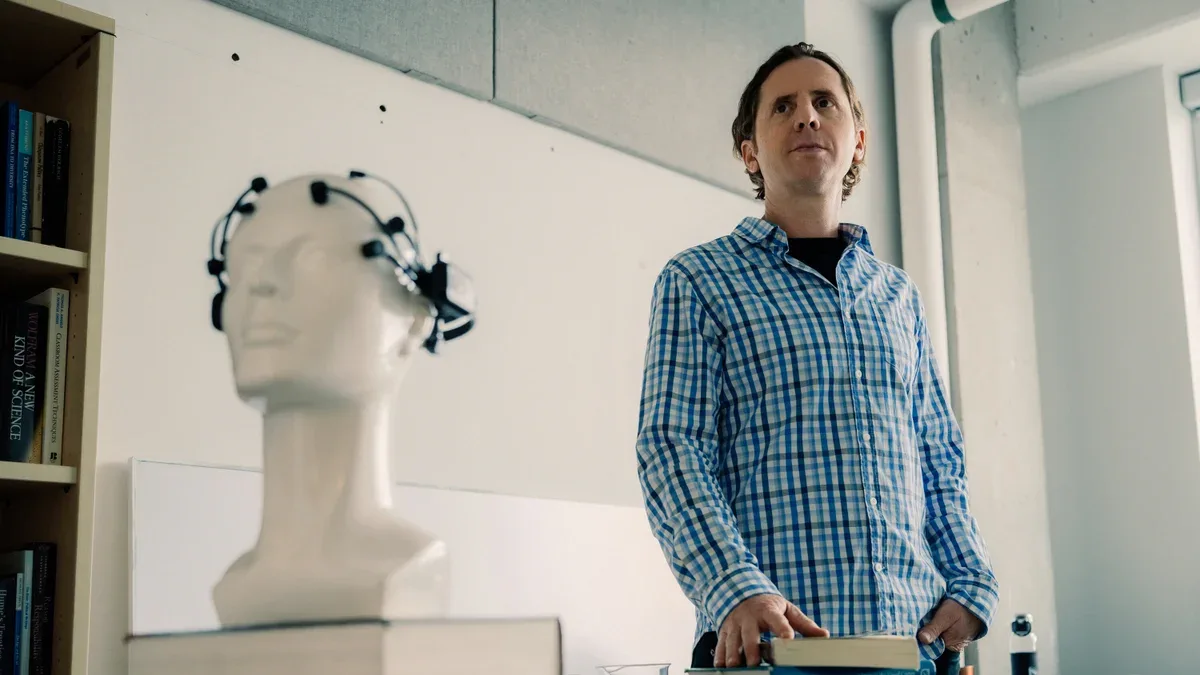
Nothing about his path was direct. At the University of Michigan he studied philosophy, graduated with honors in 1999 and founded the undergraduate philosophy journal. He went to work in marketing, and while he was there he read a newspaper article about a Cornell lab where robots were being evolved rather than designed. He quit, spent about fifteen months backpacking around the world, and came home having decided that was what he wanted to do.
He built his path into computer science at Michigan State, beginning in a philosophy master’s program while taking computer science courses. He finished his Ph.D. in 2010 and won a postdoctoral fellowship to Cornell, in the very lab he had read about. He has described sitting at a desk there beside the 3D-printed robots from the article.

Fooling networks, fixing robots
At the University of Wyoming he built the Evolving AI Lab and produced the work that made his name. A 2015 paper showed that the image-recognition networks everyone was excited about could be handed pictures that look like static or abstract wallpaper to a person and would announce, with near-total confidence, that they were looking at a penguin or a guitar. The same year his team put robots on the cover of Nature that could work out, in a couple of minutes, how to keep walking on a broken leg. He also ran a robotics club for Laramie students in grades six through twelve. iRobot donated three Roombas.
He was part of the start-up that Uber bought to create Uber AI Labs, and a founding member of the lab, where his team's Go-Explore algorithm set records on video games that had stumped earlier methods. That was another Nature paper. He led a research team at OpenAI, where he worked on teaching a system to play Minecraft by watching people play it. He joined the University of British Columbia in 2021, became a full professor in 2024 and advised Google DeepMind. With the Tokyo lab Sakana AI he built the AI Scientist, which carries out a piece of research from idea to written paper, and the Darwin Gödel Machine, a system that rewrites its own code to get better at writing code.
The honors include the Presidential Early Career Award, the highest the United States gives young scientists and engineers, and a National Science Foundation CAREER award.
He is not casual about where this leads. He co-authored a widely read 2024 paper in Science on managing extreme risks from AI, and when his new company launched he wrote publicly that he takes those risks seriously, believes the benefits outweigh them, and thinks that if self-improving AI is coming regardless, people who care about safety should be among the ones building it.
Away from work he has visited more than 55 countries on six continents and climbed Kilimanjaro. His personal website has a page of riddles. His résumé lists hockey, kitesurfing, ultimate frisbee, Borges and Calvino.
Extemp gives you thirty minutes to get ready to explain something complicated to a stranger. He has spent the thirty years since getting ready for a harder question, and he is still explaining.

On record
Our results archive is still being built and has gaps, so this is simply what we hold today.