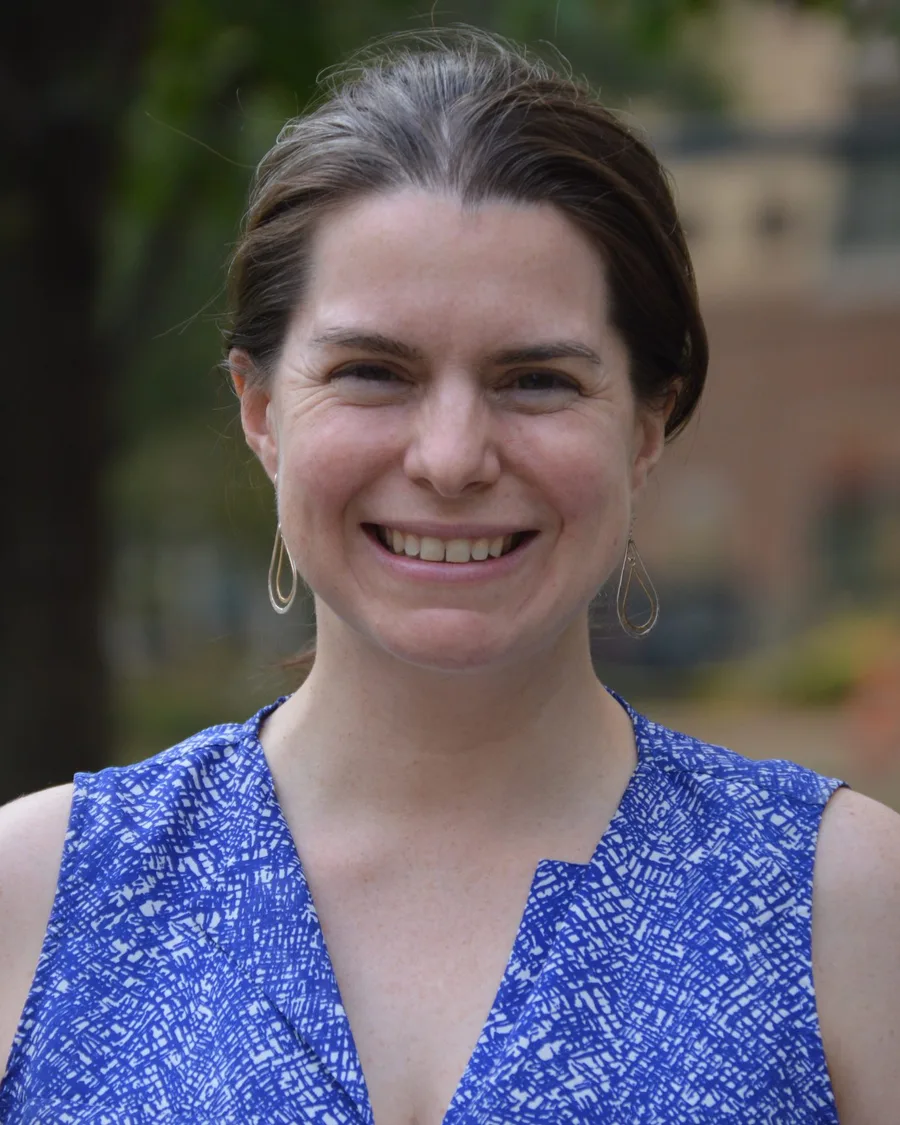


MIFA’s rules describe an oration as an original, persuasive speech, one that might alert the audience to a threatening danger or present a solution to a problem. In 1999 a senior from St. Joseph named Anna Clark won the state championship in it.
Nineteen years later she published one that runs to three hundred pages. The Poisoned City: Flint’s Water and the American Urban Tragedy is a full account of how an American city’s drinking water was poisoned and how the people who lived there forced the truth into the open. It won the Hillman Prize for Book Journalism and the Rachel Carson Environment Book Award, was named a Michigan Notable Book, and was longlisted for the Andrew Carnegie Medal. The Rachel Carson judges praised it for showing Flint as a warning for every other city.
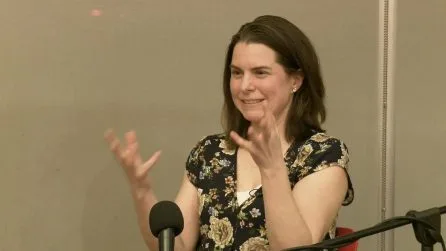
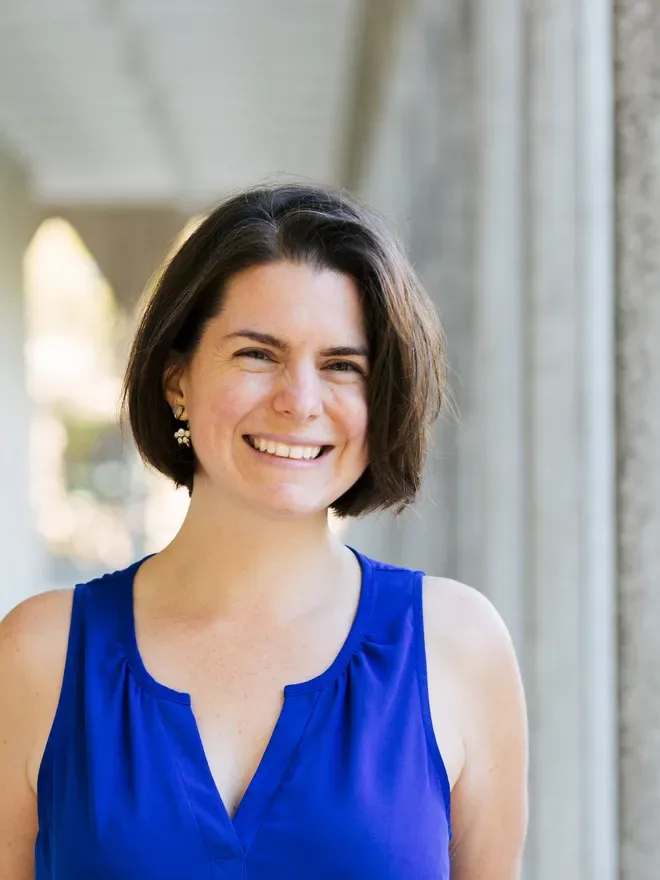
Clark is now a reporter for ProPublica, based in Detroit. She is still doing what an orator does: finding the danger, getting the facts right, and telling people plainly.
She has said so herself
In a 2019 column for the Detroit Free Press, arguing that Benton Harbor’s public schools deserved support and not closure, she described what the schools across the river in St. Joseph had given her. Money was short at home. At school she edited a newsmagazine, acted in plays, “went out for speech competitions” and, by her own cheerful account, failed to make a great many athletic teams.
She did not mention that she won. Her point was larger: a kid from a working-class family got those chances because her town’s schools could pay for them, and the kids a bridge away deserved the same. We could not put the case for this activity better.
For the record, she went to the MIFA State Finals in Class B/C/D Oratory three years in a row, as a sophomore, a junior and a senior, and won the title the last time.
Twin towns
She was born in St. Joseph in 1980. Her mother grew up in neighboring Benton Harbor, where relatives still live and the family church still stands, and Clark worked part-time jobs in both towns through high school and college, including extra shifts to pay for a Spanish class trip to Spain. She has made a tradition of running a Thanksgiving-morning 5K in Benton Harbor.
At the University of Michigan’s Residential College she studied art history and creative writing, graduated with highest honors in 2003, and did two things that set the pattern for her life. She walked into The Michigan Daily as a freshman in the fall of 1999, a few months after that state title. And as a work-study student she started with the university’s Prison Creative Arts Project.
After an MFA in fiction at Warren Wilson College and a stretch of nonprofit work in Boston, she came home in 2007 and started freelancing from Detroit. She wrote for the New York Times, the Washington Post, The Nation, Politico and Elle, spent nearly five years as a correspondent for the Columbia Journalism Review, and won a Fulbright to Kenya. She edited A Detroit Anthology, sixty-four writers on their own city, which was also a Michigan Notable Book. She helped start Literary Detroit, served as a writer-in-residence in Detroit high schools, and since 2012 has co-led an improv theater workshop at a men’s prison in Macomb County. She has said the exchange runs both ways.

Flint, and after
A Knight-Wallace fellowship at Michigan in 2016 gave her a year to study water policy, environmental justice and urban planning. The book followed in 2018. She has described writing it as eighteen intense, isolating months. Along the way she learned something about her own family: her grandmother was born in Flint, to a sit-down striker, in the middle of the strike.
She joined ProPublica’s Midwest newsroom in 2021. Her investigation of Baker College, done with the Free Press, led to a federal review and, in 2025, a $2.5 million fine. Her reporting on wrongfully convicted people who were being denied the compensation Michigan law promises them sent lawmakers looking for a fix. She has written about the unanswered questions after the Oxford school shooting, about adult literacy, and this year about fluoride, the new bridge to Canada and a border town caught in a tariff fight.
She also teaches nonfiction in Alma College’s MFA program and sits on the board of the Detroit chapter of the Society of Professional Journalists. In 2023 she gave the Graham Hovey Lecture at Michigan’s Wallace House, on government secrecy. She pointed out that Michigan is one of only two states whose public-records law exempts both the governor and the legislature.
An oration asks a seventeen-year-old to stand up in front of adults and tell them something is wrong and what to do about it. Clark learned to do that in St. Joseph’s public schools. Her own argument, in that column, is that every kid should get the same chance.
On record
Our results archive is still being built and has gaps, so this is simply what we hold today.